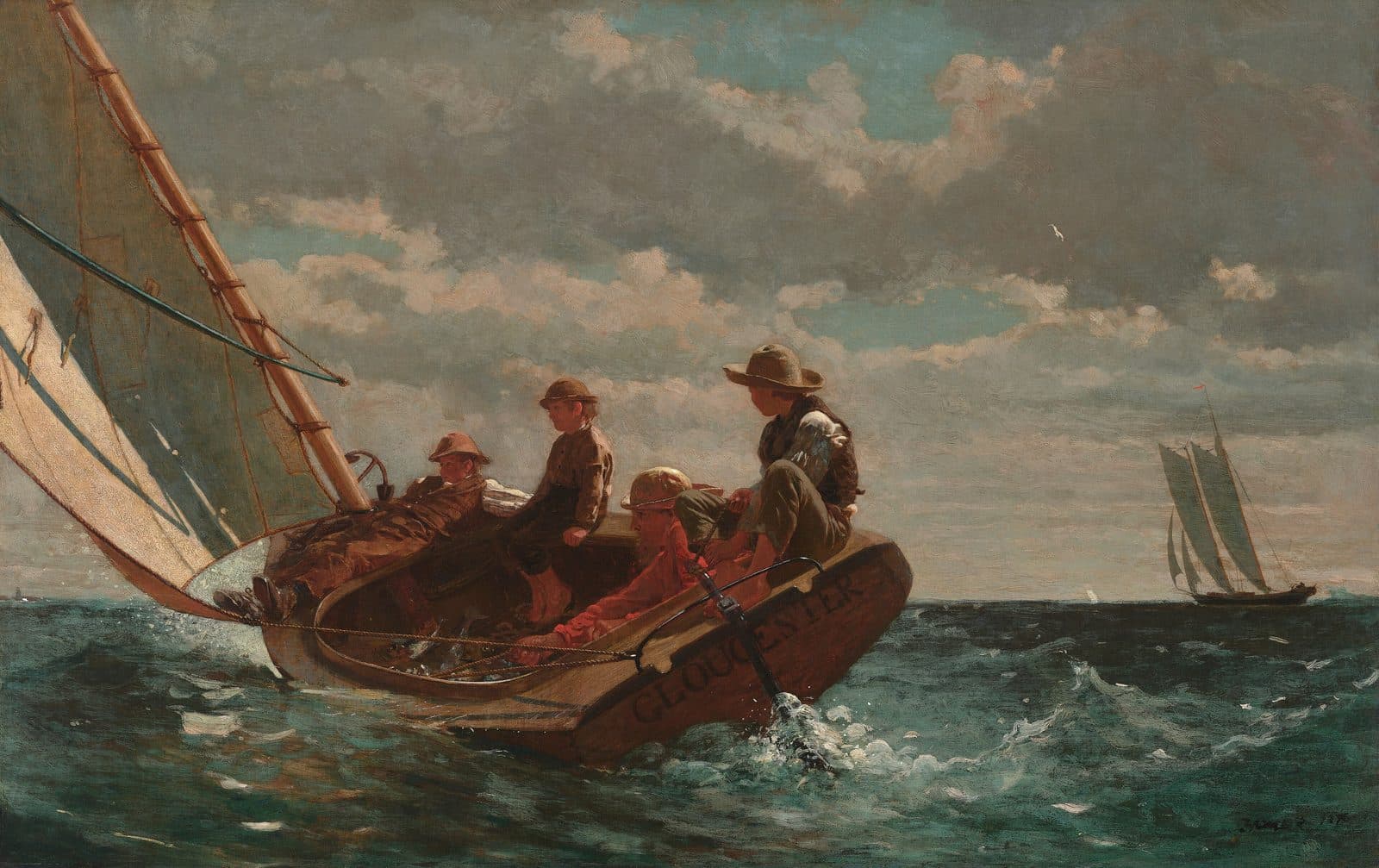
I

II
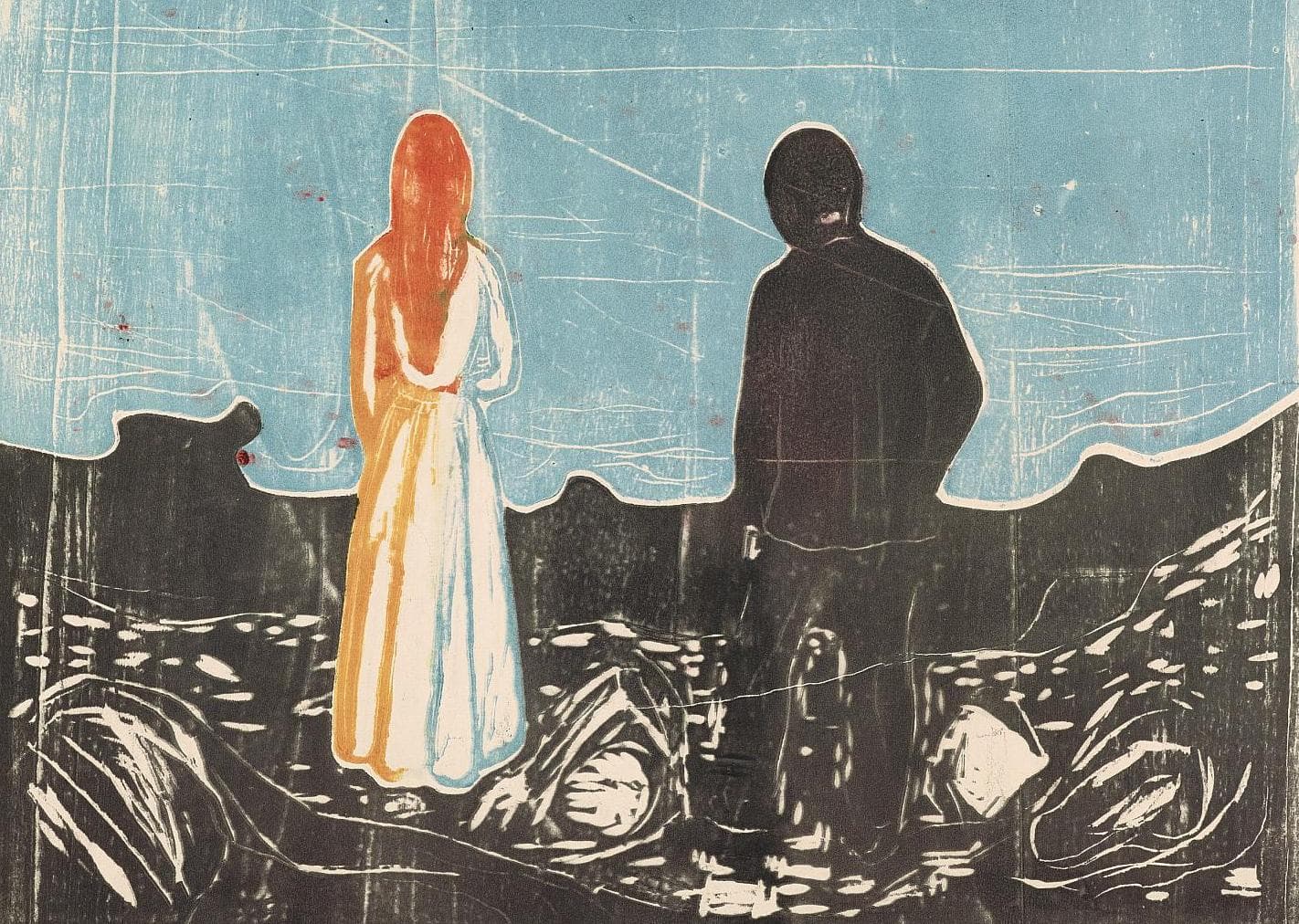
III
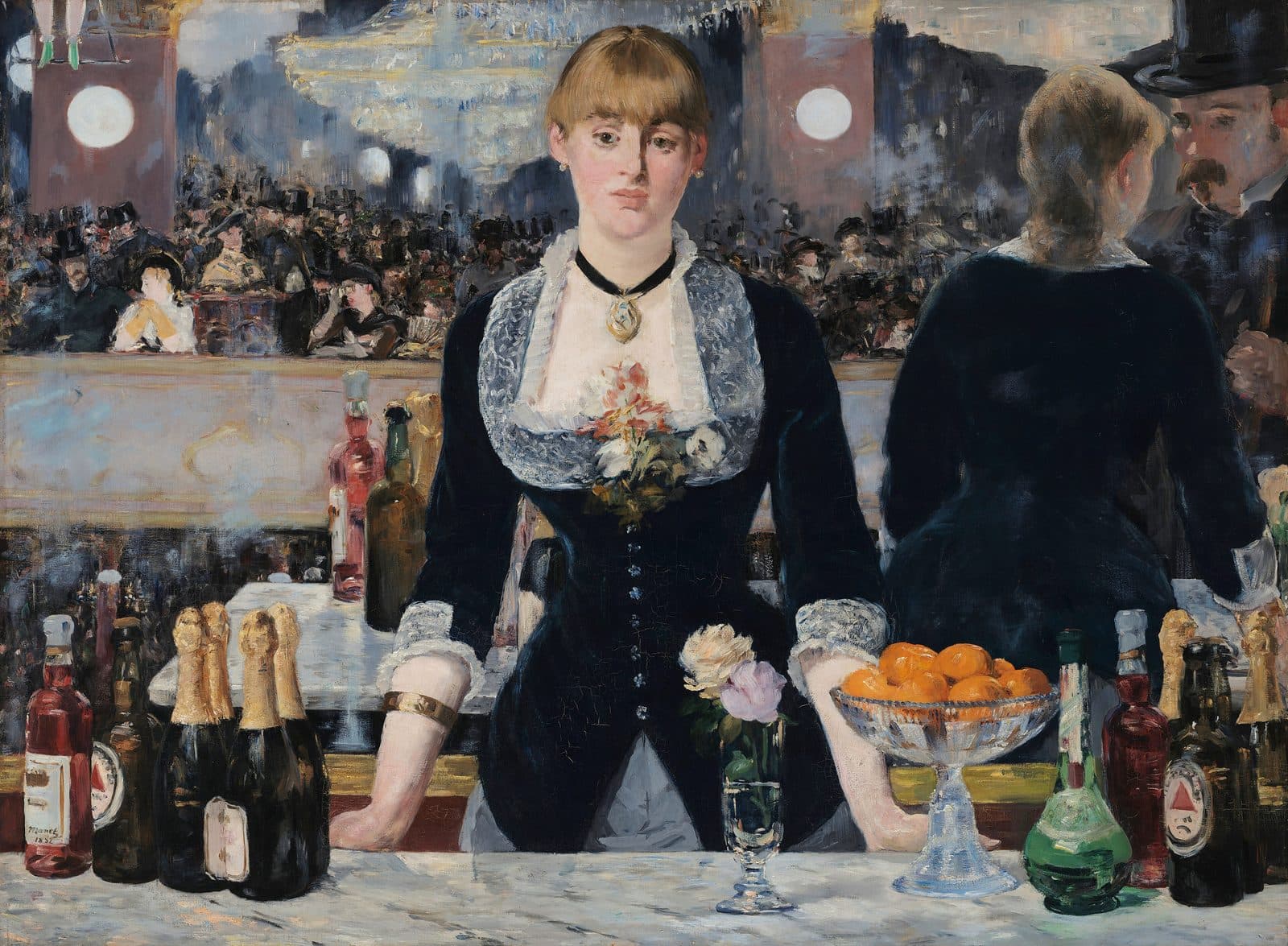
IV
implicit motive test · the picture story method
A thematic apperception test, scored.
Ask people what drives them and they describe the person they mean to be. Ask them for a story about a picture and something else comes through. This test asks both, and shows you where the two part.
- 01Four paintings, shown one at a time.
- 02A made-up story to each, 40 to 80 words: who the people are, what is happening, what they want, how it ends.
- 03A few lines on your dream life. Then the result: what your stories reach for, beside what you say you want.
about 5 minutes · free · no account · your stories are not saved
about the methodabout the method
The thematic apperception test, explained in plain words
Motive research has its own vocabulary. Each term below comes first as researchers use it, then in plain words.
Thematic apperception test
Apperception is an old word for perceiving something through what you already carry inside. Christiana Morgan and Henry Murray published the test in 1935: a set of ambiguous pictures, and the instruction to tell a story about each.
in plain wordsYou are shown a picture that could mean many things. The story you tell shows what you brought to it.
Implicit and self-attributed motives
Researchers distinguish self-attributed motives, the ones people report when asked, from implicit motives, which show in imagination rather than in answers. The two correlate only weakly and predict different things: what people say predicts the choices they make when asked to choose; what their stories reach for predicts what they do spontaneously, over years (McClelland, Koestner & Weinberger, 1989).
in plain wordsThere is what you say you want, and what you are drawn to without deciding to be. They are often not the same, and the second tends to shape what you do when nobody is asking.
The three motives
- ACHAchievement. Concern with a standard of excellence: doing well, doing better, winning, a unique accomplishment, or distress at failing. In plain words: doing something well.
- AFFAffiliation. Concern with warm contact: friendship, intimacy, belonging, sadness at a separation, or the wish to restore a bond. In plain words: closeness.
- POWPower. Concern with having an effect on others: strong or forceful acts, control, persuading, help nobody asked for, impressing, reputation. In plain words: influence.
Motive imagery and coding
David McClelland and his colleagues turned the test into a measure in the early 1950s by writing rules for scoring the imagery in the stories. The research form is now called the Picture Story Exercise, and the standard rules are David Winter’s manual for motive imagery in running text (1994). Coding means reading every sentence against those rules. Done by hand it takes trained coders hours per person, which is why the method stayed in laboratories; recent studies show machine coders can now match them (Nilsson et al., 2025; Brede et al., 2025). The research manual is strict on purpose and counts only the clearest cases. This test reads more broadly, for the motive underneath every sentence, so its proportions are its own and cannot be compared with published research scores.
in plain wordsEach sentence you write is read for what lies underneath it: a wish to do well, to be close to someone, or to have an effect on people. Your dream life is read the same way, wish by wish, so the two can be set side by side.
Needs, press and outcome
Murray read each story for the hero’s needs, the press (the forces acting on the hero), and how it turns out. This test keeps that older reading beside the motive score: how each story ends, whether its main character acts or is acted upon, and which fears appear. That part is read by the AI and is not scored by Winter’s manual.
in plain wordsBeyond what your characters want, it matters whether they get to do anything about it, and how you let their stories end.
Activity inhibition
McClelland found that how often a person’s stories use the word “not” tracks how much they hold their impulses in check, and used it as a measure of self-restraint (McClelland, 1975; McClelland & Boyatzis, 1982).
in plain wordsThe more your stories say “not”, the more of their energy goes into holding back. The number is only meaningful against other people’s stories, so the result shows it without a verdict until there are enough of them.
Possible selves
Psychologists call the selves people hope to become, and fear becoming, possible selves (Markus & Nurius, 1986). This test asks for yours as a dream life: the life you would have if every goal came true. Each wish in it is weighed by how firmly you put it and by how early it came, so a wish you lead with counts for more than one you add in passing.
in plain words“I want to be rich and powerful, and also a loving family” and “I want a loving family, and some money would be good too” name the same things, but they are not the same dream. The test reads the difference.
Motive congruence
When people pursue goals that do not match their implicit motives, progress on those goals does not raise their well-being the way it does when the two match (Brunstein, Schultheiss & Grässmann, 1998). The mismatch has been described as a hidden stressor, linked to lower well-being and more physical complaints (Baumann, Kaschel & Kuhl, 2005).
in plain wordsWorking hard toward something the deeper part of you does not care about can succeed and still leave you flat. These are findings about groups of people; for one person, a gap is a place to look, not a verdict.
Narrowing the gap
Implicit motives change slowly, and the research does not say you should obey them. It describes several ways people narrow the distance between the two. Pursuing the same goal by a route that also feeds the motive underneath (Brunstein, Schultheiss & Grässmann, 1998). Imagining a goal vividly before committing to it, which lets the implicit motives weigh in (Schultheiss & Brunstein, 1999). Telling apart goals that feel your own from goals taken on to meet someone else’s expectations, which satisfy less (Sheldon & Elliot, 1999). And lowering long-running stress, under which the two drift further apart (Baumann, Kaschel & Kuhl, 2005).
in plain wordsYou rarely need a new goal. More often you need a different way of reaching it, a clearer picture of it before you commit, an honest look at whose goal it is, and less pressure while you pursue it. Your result suggests which of these fits you.
Normed pictures
The research uses a normed picture set: pictures whose pull on each motive has been measured across many people. Most of them are photographs. This test uses four public-domain paintings by Winslow Homer, Johannes Vermeer, Edvard Munch and Édouard Manet, chosen to carry the same cues, so its scoring is adapted, not normed. While you write, each painting carries its painter only: a title is already an interpretation, and it would steer the story. The titles appear with your result.
in plain wordsThe paintings stand in for the classic research pictures. Read your result as a sketch, not a score.
Your stories are not saved. The privacy page has the details.
The research that inspired this test
This test draws on the studies below. It is not a replication of any of their instruments, and its results cannot be compared with theirs.
- Morgan & Murray (1935). A method for investigating fantasies: the Thematic Apperception Test. Archives of Neurology and Psychiatry 34, 289–306.
- McClelland, Atkinson, Clark & Lowell (1953). The Achievement Motive.
- McClelland (1975). Power: The Inner Experience.
- McClelland & Boyatzis (1982). Leadership motive pattern and long-term success in management. Journal of Applied Psychology 67, 737–743.
- Winter (1994). Manual for Scoring Motive Imagery in Running Text.
- McClelland, Koestner & Weinberger (1989). How do self-attributed and implicit motives differ? Psychological Review 96, 690–702.
- Markus & Nurius (1986). Possible selves. American Psychologist 41, 954–969.
- Brunstein, Schultheiss & Grässmann (1998). Personal goals and emotional well-being. Journal of Personality and Social Psychology 75, 494–508.
- Schultheiss & Brunstein (1999). Goal imagery: bridging the gap between implicit motives and explicit goals. Journal of Personality 67, 1–38.
- Sheldon & Elliot (1999). Goal striving, need satisfaction, and longitudinal well-being: the self-concordance model. Journal of Personality and Social Psychology 76, 482–497.
- Baumann, Kaschel & Kuhl (2005). Striving for unwanted goals. Journal of Personality and Social Psychology 89, 781–799.
- Nilsson, Runge, Ganesan, Lövenstierne, Soni & Kjell (2025). Automatic implicit motive codings are at least as accurate as humans’ and 99% faster. Journal of Personality and Social Psychology 128, 1371–1392.
- Brede, Schönbrodt, Hagemeyer & Lerche (2025). Automatically coding implicit motives in Picture Story Exercises: the Automated Motive Coder. NLPSI at ICWSM 2025.
Also on this site: Jung’s word association experiment, the other instrument from the same century of research into what people cannot report about themselves.