
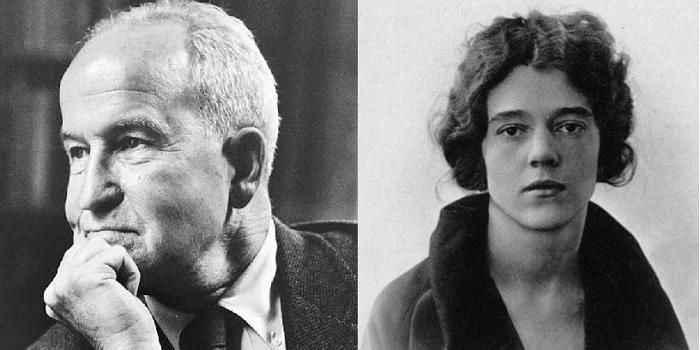
The Thematic Apperception Test, or TAT, was created by Christiana Morgan and Henry Murray at Harvard in the early 1930s, and published in 1935 under both their names, hers first. If you've only ever seen it called "Murray's TAT", you've met the usual version of the story. The fuller one is more interesting, and it explains a lot about what the test was for.
Who created the Thematic Apperception Test?
Two people at the Harvard Psychological Clinic. Christiana Morgan and Henry Murray published "A method for investigating fantasies: the Thematic Apperception Test" in 1935, in the Archives of Neurology and Psychiatry. Her name comes first on the paper.
In 1943 Harvard University Press published the standard version: 31 picture cards and a manual. That edition carried Murray's name, and the habit of calling it Murray's test started there. Nothing about the method changed. The credit did.
Who was Christiana Morgan?
Morgan came to psychology through Jung. She had been in analysis with him in Zurich in the 1920s, and he went on to discuss her long sequences of visionary images in his seminars. When she joined Murray at the Harvard clinic, she brought with her a very practical interest: how do you get at the images a person carries without simply asking them to describe themselves?
That question is the TAT in one sentence. A person who is asked "what do you want from life?" gives a considered answer. A person who is asked "what is happening in this picture?" starts telling a story, and stories leak.
Who was Henry Murray?
Murray ran the Harvard Psychological Clinic and trained first in medicine and biochemistry before he turned to the mind. In 1938 he published Explorations in Personality, a big, ambitious book in which a team studied a group of young men from every angle they could think of, the TAT among them.
Out of that work came his vocabulary of needs and press. Needs are what drives a person from the inside: the need to achieve, to be close to others, to have influence, to be left alone. Press is what the world pushes back with. A good TAT story, in his view, shows both: what the hero wants, and what stands in the way.
What does "apperception" mean?
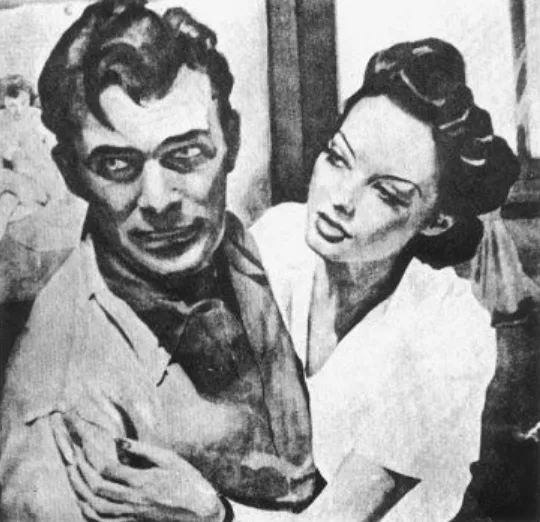
It's an old word for perceiving something through what you already carry. Two people look at the same picture of a young man at a window. One sees him waiting for a letter. The other sees him deciding whether to leave home. The picture didn't say either thing. The difference came from the people looking.
That's why the cards are deliberately unclear. A sharp, obvious picture gives everyone the same story. A vague one leaves room, and what fills the room is the storyteller.
What was the TAT originally used for?
At first, for exploring a person's inner life in a clinic. A psychologist would show a selection of cards, collect the stories, and read them for recurring themes: who the heroes are, what they want, how things tend to end. It was rich, and it was also loose. Two readers could come away with two different pictures of the same person.
That looseness is where most of the criticism of the TAT comes from, and I think the criticism is fair when the stories are read by impression alone. I wrote about how the test is scored today, and how well it holds up, in The Thematic Apperception Test, explained simply.
How did the TAT become a research tool?
In the late 1940s and early 1950s, David McClelland and his colleagues did something unglamorous and very useful. They wrote rules. Instead of asking "what does this story suggest?", a coder asked "does this sentence show someone striving for a standard of excellence, yes or no?" Their 1953 book, The Achievement Motive, laid out the method.
Rules made the test checkable. Two trained coders could score the same stories and compare. Later, David Winter brought the main motives into a single manual for scoring imagery in any text (1994). Researchers today usually use a modern set of pictures, called the Picture Story Exercise, and score the stories with rules like these.
the TAT in five dates
- 1935Morgan and Murray publish the method, Morgan first.
- 1938Murray's Explorations in Personality puts it at the centre of a theory of needs and press.
- 1943Harvard publishes the standard 31 cards and manual under Murray's name.
- 1953McClelland and colleagues publish rules for scoring motives in the stories.
- 1994Winter's manual for scoring motive imagery in running text.
Why does the history matter if you want to take the test?
Because it tells you what to expect from it. Morgan and Murray were trying to reach what a person doesn't say directly. McClelland's group made that reach measurable, for a few things at a time: mainly the urge to achieve, the urge to be close to people and the urge to have an effect on them. A picture-story test done well tells you about those. It doesn't read your whole personality, and anyone who promises that is selling the 1935 version without the 1953 discipline.
The picture story test on this site follows that line: four public-domain paintings, a short story for each, and a reading of the three motives next to what you say you want.
Questions people ask
Who invented the Thematic Apperception Test?
Christiana Morgan and Henry Murray, at the Harvard Psychological Clinic. Their paper introducing it was published in 1935, with Morgan as first author.
Why is the TAT credited to Henry Murray?
The standard 1943 edition of the cards and manual was published under Murray's name, and most later sources followed that edition. The original 1935 paper names both Morgan and Murray.
When was the TAT created?
It was developed in the early 1930s and first published in 1935. The standard set of 31 cards followed in 1943.
What does TAT stand for in psychology?
Thematic Apperception Test. 'Apperception' means perceiving something through what you already carry, which is the idea behind asking people to tell stories about unclear pictures.
Is the TAT still used today?
Yes, in two ways. Some clinicians still use the cards to explore themes in a person's stories. Researchers mostly use a modern set of pictures, the Picture Story Exercise, and score the stories with published rules for motives.

Dr. Walid Messaoudi